
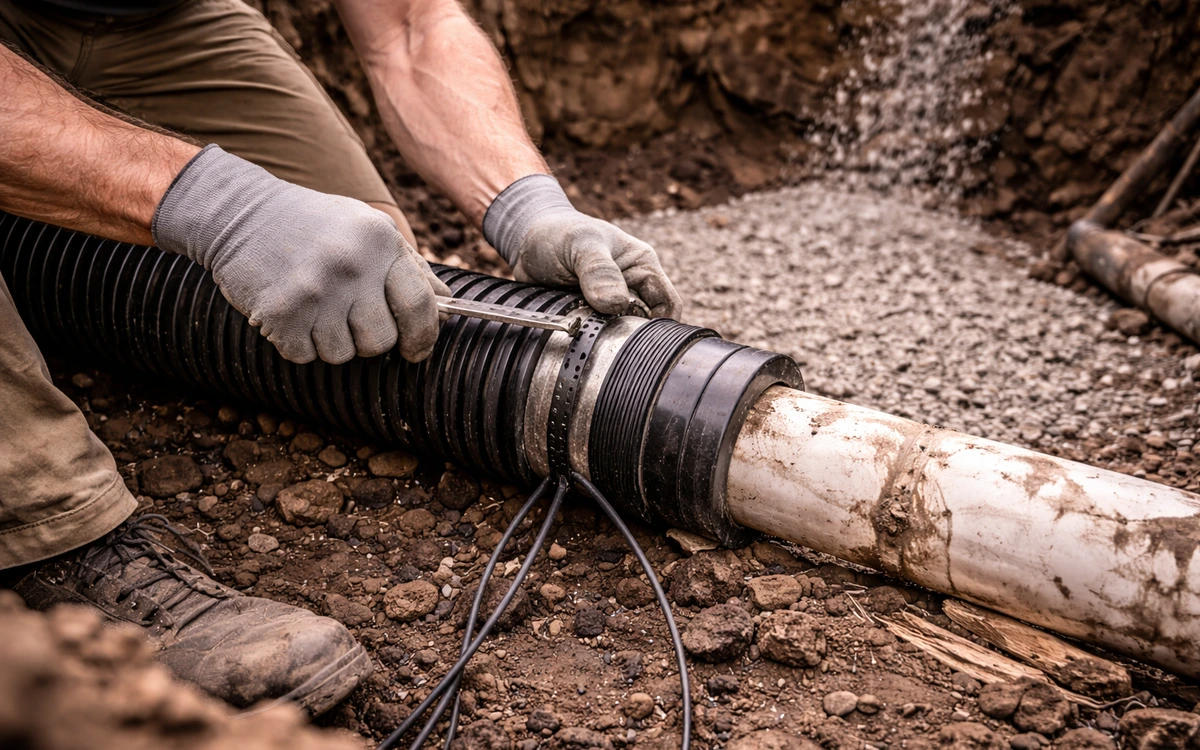
Sinkhole repair costs depend mostly on what is actually failing: a shallow surface depression, a deeper subsurface void, or structural damage that has already reached the house, driveway, pool deck, or foundation. Small non-structural sinkholes can sometimes be repaired with excavation, engineered fill, and compaction, while larger or active sinkholes often require geotechnical testing, grouting, underpinning, or full structural stabilization.
The biggest cost jump usually happens when the project moves from “fill and stabilize the ground” to “protect or repair the structure above it.” Once a sinkhole affects load-bearing areas, the work starts to include engineering, deep stabilization, and structural correction rather than simple earthwork.
Sinkhole Repair Cost Ranges (Most Common Scenarios)
Most sinkhole repair jobs fall into one of three buckets: shallow surface repair, deeper subsurface stabilization, or structural remediation. Surface problems are cheaper because the repair is mostly excavation, engineered fill, and compaction. Deeper or recurring sinkholes cost more because the void has to be stabilized below grade before the surface can be restored.
Costs rise very quickly when the repair requires grouting, underpinning, or reconstruction of damaged slabs, driveways, patios, or foundations. At that point, you are no longer paying only for dirt work; you are paying for soil stabilization, engineering oversight, and structural repair.
| Repair Scenario | Typical Cost Range | What You’re Paying For |
|---|---|---|
| Minor surface sinkhole repair | $2,000–$5,000 | Excavation, fill, compaction, and surface restoration |
| Medium non-structural sinkhole repair | $5,000–$15,000 | Deeper excavation, engineered fill, and stabilization |
| Full residential sinkhole repair | $10,000–$30,000 | Site stabilization, void treatment, and restoration |
| Compaction grouting or deep stabilization | $20,000–$70,000+ | Subsurface grout injection and void remediation |
| Structural reinforcement above sinkhole | $5,000–$15,000 | Foundation support, slab repair, or localized strengthening |
| Major sinkhole repair with structural damage | $15,000–$75,000+ | Stabilization plus structural correction and site restoration |
Typical total: $5,000–$20,000 for many residential sinkhole repairs. Deep or structural sinkholes: $50,000+ is possible when grouting and reconstruction are required.
Cost by Severity (Fast Self-Assessment)
Sinkhole repairs are easier to estimate by severity than by diameter alone. A shallow depression in a yard is not priced the same as a sinkhole beneath a driveway or slab, even if the surface opening looks small. What matters is how deep the void is, whether the ground is still moving, and whether a structure is affected.
Minor
- What it looks like: shallow depression in yard or non-structural area
- Expected cost: $2,000–$5,000
- Common repair: excavation, fill, and compaction
Moderate
- What it looks like: larger void, recurring depression, affected driveway or hardscape
- Expected cost: $5,000–$20,000
- Common repair: deeper stabilization and partial reconstruction
Severe
- What it looks like: active movement, structural cracking, slab or foundation impact
- Expected cost: $20,000–$75,000+
- Common repair: grouting, underpinning, and structural restoration
Sinkhole Repair Cost by Repair Type
Repair method has a major effect on price because each method solves a different problem. Basic fill-and-compact repairs are for shallower, more stable failures. Grouting is used when subsurface voids must be stabilized without fully excavating the entire affected area. Underpinning or structural reinforcement is used when the sinkhole has already undermined a load-bearing element.
This is why quotes can vary so widely. Two contractors may both describe the job as “sinkhole repair,” but one may be pricing surface restoration while the other is pricing deep geotechnical stabilization.
| Repair Type | Typical Cost Range | Why It Costs More (or Less) |
|---|---|---|
| Basic fill and compaction | $1,000–$5,000 | Best for smaller shallow sinkholes |
| Excavation and engineered backfill | $5,000–$15,000 | More labor and better long-term stabilization |
| Compaction grouting | $2,000–$7,000 per injection zone | Specialized equipment and subsurface treatment |
| Structural reinforcement | $5,000–$15,000 | Needed when slabs or foundations are affected |
| Full excavation and structural remediation | $10,000–$30,000+ | Combines stabilization with reconstruction work |
What Increases Sinkhole Repair Cost
The biggest cost drivers are depth, ongoing movement, and structural exposure. The more uncertainty there is below the surface, the more likely the project will need testing, engineering, or deep stabilization instead of simple fill work.
- Void depth: deeper failures are more expensive to stabilize
- Active movement: ongoing settlement increases repair complexity
- Structural damage: cracks in slabs, patios, or foundations add major scope
- Engineering: geotechnical analysis and structural review increase cost
- Access: limited equipment access can make excavation or grouting harder
- Restoration: driveways, landscaping, and hardscape replacement add finish costs
When Basic Filling Is Enough vs When Full Remediation Is Required
A simple fill repair is only appropriate when the sinkhole is shallow, stable, and clearly limited to non-structural ground. Full remediation is usually required when the sinkhole is recurring, tied to a deeper void, or has already caused movement in a slab, driveway, retaining wall, or foundation.
Basic filling is usually enough if:
- The depression is shallow and localized
- No structural cracking is present nearby
- The ground has stabilized and the void is limited
Full remediation is usually required if:
- The sinkhole keeps reopening or expanding
- A structure, driveway, or pool area is affected
- Engineering or subsurface stabilization is needed
Rule: if the sinkhole has affected a load-bearing area or continues to move, filling alone is usually not a reliable fix.
Common Add-Ons During Sinkhole Repair
Many sinkhole jobs become more expensive because the visible hole is only part of the problem. Once repair work starts, contractors often uncover drainage issues, slab damage, or the need for testing to define the real extent of the void.
| Add-On | Typical Cost | Best Use |
|---|---|---|
| Inspection and assessment | $300–$500 | Basic professional evaluation before repair |
| Soil testing or geotechnical review | $500–$1,000+ | Deeper or uncertain failures |
| Structural engineer review | $500–$2,000+ | Foundation or slab concerns |
| Driveway, patio, or hardscape restoration | $1,000–$5,000 | Surface reconstruction after stabilization |
| Drainage correction | $1,000–$8,000+ | Helps reduce recurrence in water-related failures |
What a Sinkhole Repair Quote Should Include
A good quote should clearly separate surface restoration from actual subsurface stabilization. That is the difference between a cheap cosmetic fix and a real repair.
- Repair method being used
- Depth and affected area assumptions
- Engineering or soil testing included or excluded
- Structural repair scope, if any
- Surface restoration included or excluded
- Monitoring or warranty terms