
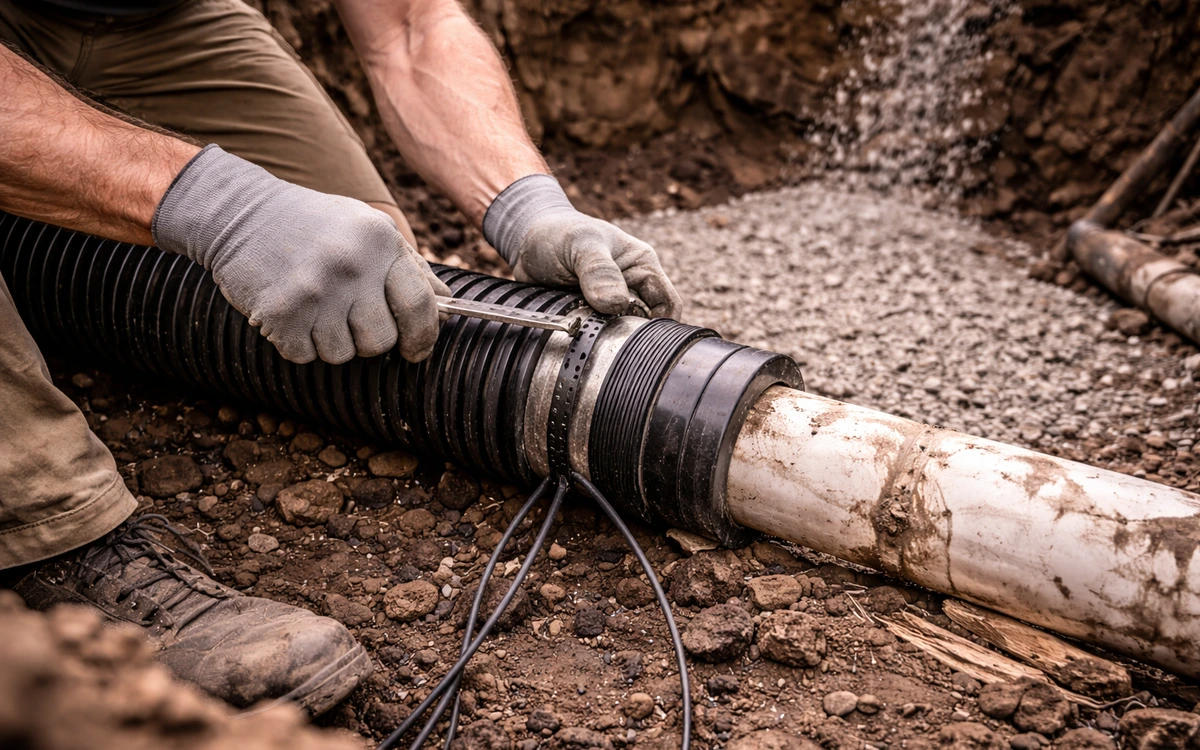
We provide professional sinkhole repair and soil stabilization services in Michigan for subsurface voids, collapsing ground, and structural depressions. Our specialists utilize high-density polyurethane injection and compaction grouting to reinforce unstable soil and seal voids before they compromise foundations or driveways. Request a professional quote to stabilize your property and prevent further soil migration or structural settlement.
What Causes a Sinkhole to Form?
Sinkholes form when soil beneath the surface starts washing into an underground void or unstable area and the ground above loses support. This can happen from natural subsurface erosion, broken drain lines, leaking water, poor compaction, or conditions that let water keep carrying soil away until the surface starts to drop.
How Do Michigan Ground Conditions Affect Sinkhole Repair?
In Michigan, sinkhole-related settlement can stem from glacial soils, groundwater erosion, and in some areas the collapse of older underground infrastructure. Properties across southern Michigan, Great Lakes shorelines, and river corridors may experience localized ground settlement where supporting soils have been washed out. Sinkhole repair methods stabilize these weak zones and restore structural support.
What Are the Signs of a Sinkhole on Your Property?
Common sinkhole signs include a sudden depression in the yard, cracking in concrete or pavement, doors or windows that start sticking, gaps appearing near the foundation, or low spots that keep getting worse after rain. In many cases, the first thing people notice is that one area of the ground looks like it’s slowly collapsing or pulling away from nearby structures.
Can a Sinkhole Be Repaired Without Damaging the House or Yard?
Yes, many sinkholes can be repaired without major damage to the house or yard, but the approach depends on where the void is and how far the unstable soil extends. The goal is to stabilize the ground underneath and around the affected area before surface repairs are made, so the problem doesn’t keep reopening after the visible hole is filled.
What Is the Difference Between Sinkhole Repair and Foundation Repair?
Sinkhole repair focuses on stabilizing the ground and subsurface void that caused the movement, while foundation repair deals with structural damage after that movement starts affecting the house. The two are often related, but treating the foundation alone does not fix the unstable ground if the real problem is a void or collapsing soil below.
How Is a Sinkhole Actually Repaired?
Sinkholes are typically repaired by exposing the affected area if needed, removing loose material, filling the void with suitable material or grout, and rebuilding the area in a way that restores support. The exact method depends on the size of the sinkhole, how deep the void goes, and whether the damage is limited to the surface or tied to drainage or structural problems nearby.
Is a Sinkhole an Emergency?
A sinkhole can be an emergency when the ground is actively dropping, the hole is expanding, or the movement is close to a home, driveway, retaining wall, or utility area. Even when it starts small, unstable ground can worsen quickly, which is why new depressions, sudden settlement, or collapsing soil should be treated as a serious safety and property issue.
How Much Does Sinkhole Repair Cost in Michigan?
Sinkhole repair costs in Michigan typically range between $712 and $1804, calculated based on the cubic yardage of the void, the required injection depth, and the proximity to load-bearing structures. Final pricing is influenced by the choice of stabilization material—such as cementitious grout or structural resins—and the extent of necessary drainage corrections to prevent future subsurface erosion.
Cities we serve in Michigan
Choose your city to see local details and typical pricing ranges.